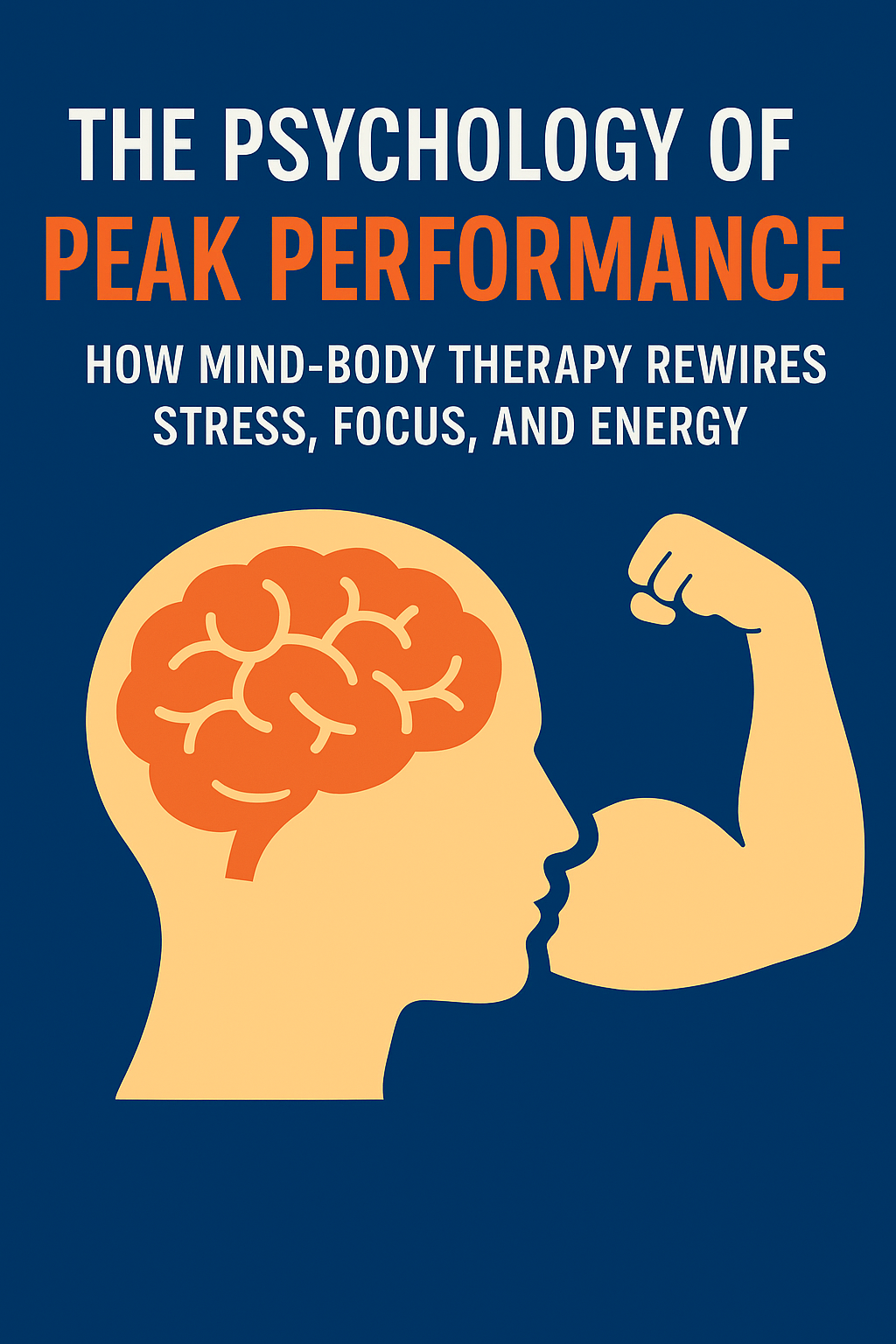
The Psychology of Peak Performance: How Mind-Body Therapy Rewires Stress, Focus, and Energy
Introduction
In a world obsessed with productivity and self-optimization, most of us try to “think” our way out of stress — only to burn out faster. The truth is, your mind and body are not separate systems. They’re one integrated performance network. Mind-Body Performance Therapy takes this principle seriously, merging psychological science with physical health practices to help you think clearer, recover faster, and perform better in every area of life.

What Is Mind-Body Performance Therapy?
Mind-Body Performance Therapy bridges the gap between traditional talk therapy and physical performance coaching. It combines evidence-based psychological approaches, such as Cognitive Behavioral Therapy (CBT), Acceptance and Commitment Therapy (ACT), and mindfulness, with somatic techniques like breathwork, movement, and biofeedback.

The goal isn’t just to “feel better.” It’s to train your nervous system to handle pressure, recover from stress, and operate with mental clarity and emotional balance.
The Science Behind It
When you experience stress, your body doesn’t just feel tense — your brain literally shifts into survival mode. The vagus nerve, heart rate, and cortisol levels all influence your thoughts, emotions, and behavior.
Mind-Body Performance Therapy helps you retrain this feedback loop, so your brain and body respond to stress with control rather than chaos.

Recent studies show that integrating physical awareness (like controlled breathing or mindful walking) with cognitive strategies enhances:
Focus and working memory
Emotional regulation
Sleep quality
Pain tolerance
Long-term resilience
What It Looks Like in Practice
A Mind-Body Performance session might include:
Cognitive reframing — identifying the thoughts that drain focus or confidence
Breathing and grounding exercises to reset the nervous system
Body scans or light movement (like yoga poses or walk therapy)
Goal tracking using heart-rate or recovery metrics
Reflective journaling to link physical sensations with mental states
Over time, clients learn to recognize stress signals early, utilize their bodies to regulate emotions, and align their daily habits with mental and physical performance goals.

Who It’s For
This approach benefits a wide range of people:
High-achieving professionals who face burnout
Athletes optimizing performance or recovery
Trauma survivors rebuilding body awareness
Anyone seeking a balance between mind and body health
Whether you’re preparing for competition, managing chronic stress, or simply striving to show up sharper each day, this method helps you perform from a place of calm confidence instead of constant pressure.

The Future of Therapy and Performance
As mental health becomes more holistic, the line between therapy, fitness, and coaching continues to blur. The future of well-being lies in this integration, where psychology meets physiology and emotional growth fuels physical excellence.
Mind-Body Performance Therapy is more than a treatment; it’s a training model for modern life — one that teaches you how to recover, regulate, and rise stronger.

Closing Thought
Peak performance isn’t about pushing harder. It’s about syncing smarter.
When your mind and body work together, resilience becomes natural — not forced.