Your brain is like a muscle — the more you challenge, stimulate, and care for it, the stronger and healthier it becomes over time. Research in psychology, neuroscience, and aging consistently shows that certain hobbies can improve memory, attention, emotional regulation, creativity, and even reduce the risk of cognitive decline.
The good news? Keeping your brain sharp does not require expensive supplements or “brain hacks.” Many of the most powerful activities are simple hobbies you can start today.
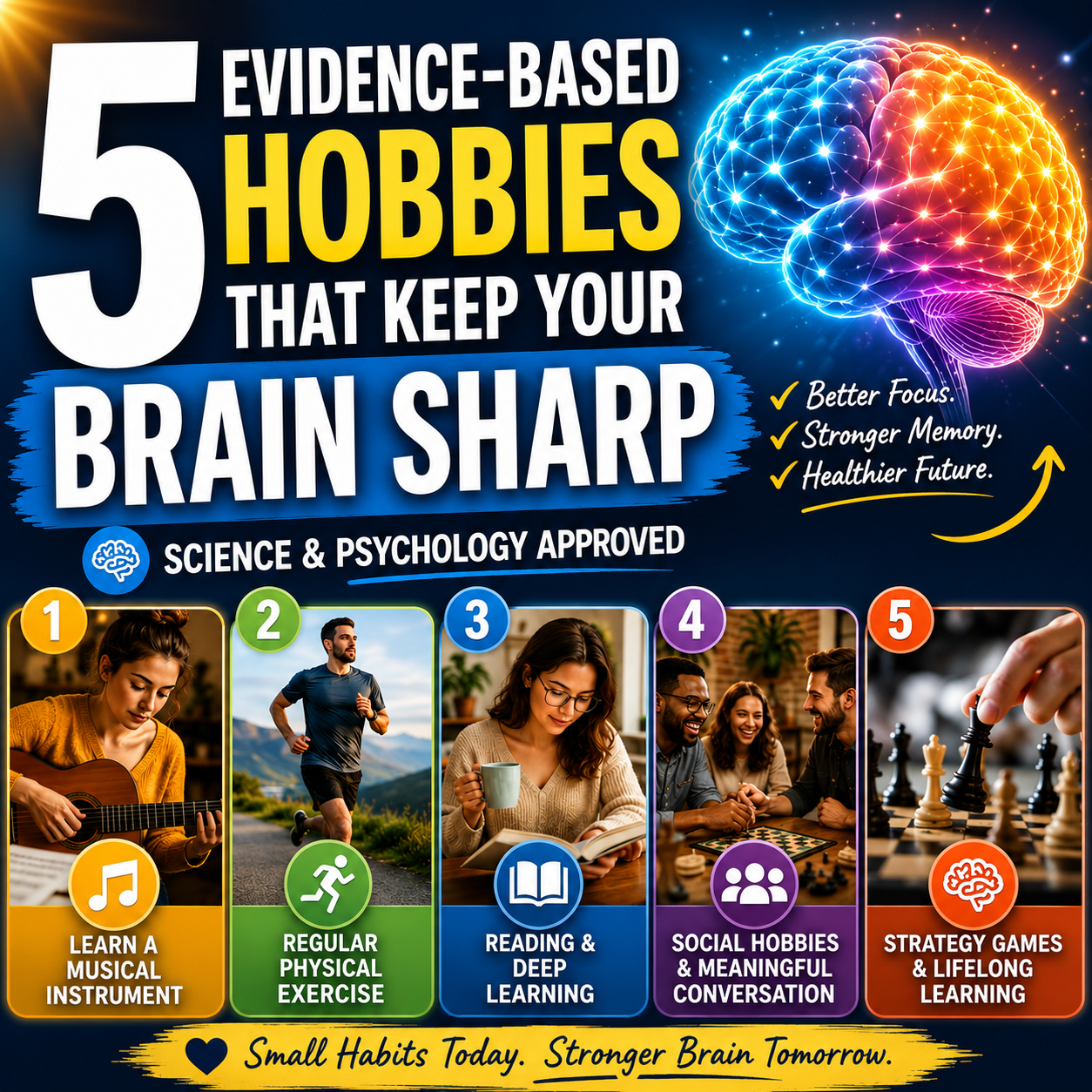
Here are 5 science-backed hobbies that psychologists and researchers consistently recommend for long-term brain health.
1. Learning a Musical Instrument


Learning music is one of the most cognitively demanding hobbies a person can engage in. It activates multiple brain regions simultaneously, including areas involved in memory, coordination, attention, auditory processing, and emotional regulation.
Research has shown that playing an instrument may:
- Improve working memory
- Increase cognitive flexibility
- Enhance processing speed
- Strengthen attention and concentration
- Promote neuroplasticity (the brain’s ability to adapt and form new connections)
Even adults who begin learning later in life can experience benefits.
You do not need to become a professional musician. Simply practicing consistently — even 15–20 minutes a day — challenges the brain in ways that passive entertainment cannot.
Good beginner options:
- Piano
- Guitar
- Drums
- Ukulele
- Singing lessons
2. Regular Physical Exercise


Exercise is one of the most powerful interventions for brain health. In fact, many psychologists and neurologists consider physical activity one of the best “brain enhancers” available.
Aerobic exercise increases blood flow to the brain and stimulates the release of brain-derived neurotrophic factor (BDNF), a protein associated with learning, memory, and brain cell growth.
Research links regular exercise to:
- Better memory
- Reduced stress and anxiety
- Improved executive functioning
- Slower cognitive decline with aging
- Lower risk of dementia
Activities that combine movement and coordination may provide additional cognitive benefits:
- Dancing
- Tennis
- Martial arts
- Pickleball
- Hiking on varied terrain
The key is consistency, not perfection.
3. Reading and Deep Learning


Reading is essentially a workout for the brain. It engages imagination, language processing, memory, critical thinking, and emotional understanding.
Studies suggest that lifelong readers often maintain stronger cognitive functioning as they age. Reading may also improve empathy and emotional intelligence by helping individuals understand different perspectives and experiences.
To maximize the cognitive benefits:
- Read challenging material occasionally
- Take notes while reading
- Discuss books with others
- Alternate between fiction and nonfiction
- Learn new subjects outside your comfort zone
Great brain-stimulating topics include:
- Psychology
- Philosophy
- History
- Neuroscience
- Biographies
- Strategy and problem-solving books
Passive scrolling trains the brain differently than focused reading. Deep reading requires sustained attention, which has become increasingly important in today’s distracted world.
4. Social Hobbies and Meaningful Conversation


Human connection is deeply tied to cognitive and emotional health. Social engagement challenges the brain to interpret emotions, read social cues, communicate ideas, regulate responses, and adapt in real time.
Research consistently shows that social isolation is associated with poorer mental and cognitive health outcomes.
Brain-healthy social hobbies include:
- Board game groups
- Sports leagues
- Book clubs
- Volunteering
- Faith or spiritual communities
- Group fitness classes
Meaningful conversation is especially important. Engaging discussions stimulate memory retrieval, perspective-taking, reasoning, and emotional processing.
Quality social interaction may also help buffer stress — which is important because chronic stress can negatively affect memory and concentration over time.
5. Strategy Games and Lifelong Learning


Your brain thrives on novelty and challenge. Activities that require planning, problem-solving, and adaptation help strengthen cognitive functioning over time.
Evidence-based brain-stimulating activities include:
- Chess
- Sudoku
- Learning a new language
- Coding
- Puzzle games
- Strategic card games
- Escape rooms
The most important factor is not whether the hobby is “intellectual,” but whether it continues to challenge you.
Psychologists often emphasize the concept of “desirable difficulty” — tasks that are challenging enough to require effort, but not so difficult that they become discouraging.
Learning new skills throughout adulthood may help maintain cognitive reserve, which refers to the brain’s resilience against aging and neurological decline.
Final Thoughts
Brain health is not built overnight. It is shaped by consistent daily habits over months and years.
The strongest evidence suggests that a combination of:
- Physical movement
- Mental stimulation
- Social connection
- Stress management
- Lifelong learning
creates the best environment for long-term cognitive health.
The goal is not perfection. The goal is to regularly engage your brain in meaningful, active, and challenging ways.
Your future brain is built by the hobbies you practice today.